

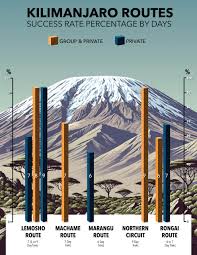
Reaching the summit of Mount Kilimanjaro depends heavily on one key factor: the route you choose. Different routes have very different success rates due to variations in acclimatization time, difficulty, and duration.
In this guide, we break down the success rates of all major Kilimanjaro routes and explain why some routes perform better than others.
Overall Kilimanjaro Success Rate
- Average success rate across all routes: ~65%
- Main reason for failure: poor acclimatization (altitude sickness)
👉 This is why route selection is critical.
Kilimanjaro Route Success Rates (Comparison Table)
| Route | Duration | Success Rate |
|---|---|---|
| Northern Circuit | 8–10 days | 90–95% |
| Lemosho Route | 7–8 days | 85–90% |
| Machame Route | 6–7 days | 75–90% |
| Rongai Route | 6–7 days | 70–85% |
| Marangu Route | 5–6 days | 50–70% |
| Umbwe Route | 6–7 days | 60–70% |
Route-by-Route Success Breakdown
1. Northern Circuit Route (Highest Success Rate)
- Success rate: 90–95%
- Why it performs best:
- Longest route (more acclimatization time)
- Gradual ascent
- Less crowded
👉 This route gives your body the most time to adjust, which greatly reduces altitude sickness.
2. Lemosho Route (Excellent Success Rate)
- Success rate: 85–90%
- Why it’s successful:
- “Climb high, sleep low” acclimatization
- 7–8 day duration
- Balanced difficulty
👉 One of the best routes for beginners aiming for high success.
3. Machame Route (High but Variable)
- Success rate:
- 7 days: 85–90%
- 6 days: 70–75%
- Why it works:
- Good acclimatization profile
- Scenic and well-paced
👉 Shorter itineraries reduce success significantly.
4. Rongai Route (Moderate Success)
- Success rate: 70–85%
- Why it’s moderate:
- Gradual slope (physically easier)
- Fewer acclimatization days
👉 A quieter route, but slightly lower success compared to Lemosho.
5. Marangu Route (Lower Success Rate)
- Success rate: 50–70%
- Why it’s lower:
- Shorter duration (often 5 days)
- Faster altitude gain
- Limited acclimatization
👉 Despite being popular, it has one of the lowest success rates.
6. Umbwe Route (Lowest Success Rate)
- Success rate: 60–70%
- Why it’s difficult:
- Very steep and direct ascent
- Poor acclimatization
👉 Best suited for experienced climbers only.
Why Some Routes Have Higher Success Rates
1. Duration Matters Most
- Longer routes = more acclimatization
- Routes 7+ days have much higher success rates
2. Acclimatization Profile
Routes that follow “climb high, sleep low” perform better.
3. Pace and Altitude Gain
- Slow, gradual climbs → higher success
- Fast ascents → higher failure rates
Key Insights from the Comparison
- Highest success: Northern Circuit
- Best balance: Lemosho Route
- Most popular with good success: Machame Route
- Lowest success: Marangu (short itineraries)
- Most challenging: Umbwe Route
How to Increase Your Summit Success
No matter which route you choose:
- Pick at least 7–8 days
- Walk slowly (“Pole Pole”)
- Stay hydrated
- Train before your climb
- Choose an experienced guide
Final Thoughts
Your chances of reaching the summit of Mount Kilimanjaro depend more on time and acclimatization than pure fitness. Routes like the Northern Circuit and Lemosho consistently deliver the highest success rates because they allow your body to adapt properly.
If your goal is to stand on Uhuru Peak, choosing the right route is the smartest decision you can make.

