

Climbing Mount Kilimanjaro is a physically demanding adventure that requires preparation. While no technical climbing skills are needed, you must build endurance, strength, and mental resilience to handle long trekking days and high altitude.
This guide provides a practical training plan before your Kilimanjaro climb, suitable for beginners and intermediate trekkers.
Why Training for Kilimanjaro Matters
Even though Kilimanjaro is a trekking peak, many climbers fail due to:
- Poor fitness
- Fatigue during summit night
- Inability to handle long hiking days
Training helps you:
- Improve stamina
- Reduce risk of injury
- Increase summit success chances
How Long Should You Train?
- Minimum: 6–8 weeks
- Ideal: 8–12 weeks
The longer you train, the better your body adapts.
Key Areas to Focus On
1. Cardiovascular Endurance
You’ll be hiking for 5–8 hours daily, so strong cardio is essential.
Best activities:
- Walking or hiking
- Running or jogging
- Cycling
- Stair climbing
2. Strength Training
You need strong legs and core for steep terrain and long days.
Focus on:
- Legs (quads, hamstrings, calves)
- Core (abs and lower back)
- Shoulders (for carrying a daypack)
Exercises:
- Squats
- Lunges
- Step-ups
- Planks
3. Hiking Practice
The best training is actual hiking.
- Practice with a backpack
- Wear your hiking boots
- Train on hills or uneven terrain
- Gradually increase distance and difficulty
4. Mental Preparation
Kilimanjaro is as much mental as physical.
- Learn to stay consistent even when tired
- Practice long walks without stopping
- Build patience (slow pace is key)
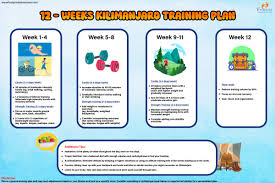
8-Week Kilimanjaro Training Plan
Weeks 1–2 (Foundation Phase)
- 3–4 days cardio (30–45 minutes)
- 2 days light strength training
- 1 short hike (1–2 hours)
Goal: Build basic fitness
Weeks 3–4 (Build Phase)
- 4 days cardio (45–60 minutes)
- 2–3 days strength training
- 1 longer hike (2–3 hours)
Goal: Improve endurance and strength
Weeks 5–6 (Endurance Phase)
- 4–5 days cardio (60+ minutes)
- 2 days strength training
- 1 long hike (4–6 hours)
Goal: Simulate trekking conditions
Weeks 7–8 (Peak Phase)
- 3–4 days cardio
- 1–2 strength sessions
- 1 very long hike (6–8 hours)
Goal: Prepare for summit effort
Weekly Training Example
- Monday: Rest or light walk
- Tuesday: Cardio (running or cycling)
- Wednesday: Strength training
- Thursday: Cardio
- Friday: Rest
- Saturday: Long hike
- Sunday: Light recovery walk
Important Training Tips
- Train with the same boots and gear you’ll use on the mountain
- Stay consistent rather than overtraining
- Gradually increase intensity
- Include rest days to recover
- Stay hydrated and eat well
Altitude Preparation
If possible:
- Train at higher elevations
- Do practice hikes on mountains or hills
- Learn about altitude sickness
Even with training, altitude affects everyone differently.
Common Mistakes to Avoid
- Starting training too late
- Ignoring strength training
- Not practicing long hikes
- Using new gear on the climb
- Overtraining before the trip
Final Thoughts
A solid training plan greatly increases your chances of successfully climbing Mount Kilimanjaro. Focus on endurance, strength, and consistency rather than speed.
With proper preparation, even beginners can confidently take on this incredible challenge and reach the summit.

