

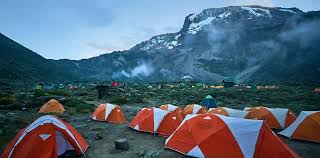
Climbing Mount Kilimanjaro involves spending several nights at different camps along the route. These base camps are essential for rest, acclimatization, and preparation—especially before the final summit push.
Each route on Kilimanjaro has its own camps, but many share common base camps near the summit.
What Are Kilimanjaro Base Camps?
Base camps are designated overnight stops where climbers:
- Sleep and recover
- Eat meals prepared by guides
- Acclimatize to altitude
- Prepare for the next day’s trek
The most important base camp is the one used before summit night.
Main Kilimanjaro Base Camps
1. Barafu Camp (Summit Base Camp)
- Altitude: حوالي 4,673 meters
- Used by: Machame, Lemosho, Umbwe routes
Barafu Camp is one of the most popular and important camps on Kilimanjaro.
What to expect:
- Rocky and exposed terrain
- Strong winds
- Cold temperatures
This is where most climbers rest before starting the midnight summit climb to Uhuru Peak.
2. Kibo Hut (Marangu Route Base Camp)
- Altitude: حوالي 4,700 meters
- Used by: Marangu Route
Unlike other routes, this camp has huts instead of tents.
Features:
- Dormitory-style accommodation
- Basic facilities
- Less exposure to wind compared to Barafu
This is the summit base for climbers on the Marangu Route.
3. School Hut Camp
- Altitude: حوالي 4,750 meters
- Used by: Northern Circuit and Rongai Route
School Hut is a quieter alternative to Barafu.
Highlights:
- Less crowded
- Slightly higher altitude for better acclimatization
- Cold and dry conditions
It offers a more peaceful summit preparation experience.
4. Crater Camp (Advanced Base Camp)
- Altitude: حوالي 5,700 meters
- Used by: Special itineraries only
This camp is located near the summit crater.
Important notes:
- Extremely high altitude
- Not recommended for beginners
- Requires excellent acclimatization
Some climbers stay here to explore glaciers and the crater area.
Other Common Camps (Lower Altitudes)
Before reaching base camp, climbers pass through several camps such as:
- Machame Camp
- Shira Camp
- Barranco Camp
- Karanga Camp
- Horombo Hut
These camps help with gradual acclimatization.
Differences Between Camps
Camping Routes
- Use tents
- More adventurous
- Shared dining tents
Hut Routes (Marangu)
- Wooden huts with beds
- More comfort
- Shared bathrooms
Conditions at Base Camps
As you approach higher camps:
- Temperatures drop significantly
- Oxygen levels decrease
- Wind exposure increases
At summit base camps, conditions are harsh:
- Freezing temperatures
- Limited comfort
- Minimal sleep before summit night
What Happens at Base Camp Before Summit?
Typical schedule:
- Early dinner
- Briefing from guides
- Rest (even if you can’t sleep well)
- Wake up around 11 PM
- Start summit climb at midnight
This is the most critical stage of the trek.
Tips for Staying at Base Camps
- Stay warm with layered clothing
- Drink plenty of water
- Eat even if you don’t feel hungry
- Rest as much as possible
- Prepare your gear before sleeping
Why Base Camps Are Important
Base camps play a key role in:
- Acclimatization
- Safety
- Energy recovery
- Summit success
Choosing a route with proper acclimatization camps increases your chances of reaching the top.
Final Thoughts
Kilimanjaro base camps are more than just places to sleep—they are essential checkpoints on your journey to the summit of Mount Kilimanjaro.
From the busy Barafu Camp to the quiet School Hut, each base camp offers a unique experience and prepares you for the ultimate goal: standing on the roof of Africa.

