

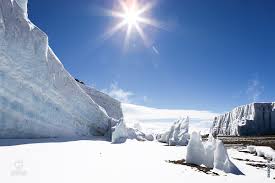
The icy summit of Mount Kilimanjaro has long been one of Africa’s most iconic sights. Snow and glaciers near Uhuru Peak once made the mountain look like a frozen crown above the savannah. But today, that image is rapidly changing—and scientists warn that the glaciers are shrinking at an alarming rate.
So, are Kilimanjaro’s glaciers disappearing? The short answer is yes—but the story is more complex.
A Brief Look at Kilimanjaro’s Ice History
At the start of the 20th century, Mount Kilimanjaro had large ice fields covering parts of its summit.
Over time:
- The ice has steadily shrunk
- Glacier coverage has fragmented
- Some ice fields have already vanished completely
What remains today is only a small fraction of what once existed.
Why Are the Glaciers Melting?
Scientists have identified several key reasons for the decline:
1. Climate Change
Rising global temperatures reduce snowfall and increase melting rates.
2. Reduced Moisture
Less moisture in the atmosphere means fewer clouds and less snow replenishment.
3. Sublimation
At high altitude, ice can turn directly into vapor without melting first, especially in dry, sunny conditions.
4. Long-Term Weather Patterns
Changes in regional climate systems have reduced the conditions needed to sustain permanent ice.
How Fast Are They Disappearing?
Studies show that Kilimanjaro has lost most of its glacier cover over the past century.
- The ice has shrunk dramatically since the early 1900s
- Only small ice patches remain near the summit area
- Scientists predict continued decline if warming trends continue
While exact timelines vary, many researchers agree that the remaining glaciers are extremely vulnerable.
What It Means for Climbers
For many trekkers climbing Mount Kilimanjaro, seeing ice near the summit feels magical. However, climbers today often notice:
- Smaller ice formations
- Less snow on summit routes
- Rapid changes in appearance depending on season
Reaching Uhuru Peak no longer guarantees a snowy landscape, especially in warmer months.
Is Kilimanjaro Really “Snowless”?
Despite headlines suggesting the mountain will become completely ice-free, Kilimanjaro is not snowless yet.
However:
- The ice is no longer permanent in the same way it once was
- Snowfall is now seasonal and inconsistent
- The long-term trend shows continuous reduction
So while snow can still be seen, it is no longer stable or guaranteed.
Why This Matters Beyond the Mountain
The loss of Kilimanjaro’s glaciers is more than a visual change. It signals broader environmental shifts:
- Climate change impacts in tropical regions
- Reduced water storage in high-altitude ice
- Effects on ecosystems and downstream communities
- Loss of natural heritage and tourism identity
The glaciers are not just ice—they are part of Africa’s environmental story.
The Emotional Impact on Visitors
Many climbers are surprised when they learn how much the glaciers have changed. For some, it adds urgency and emotion to the journey.
Standing near the summit of Mount Kilimanjaro today often comes with a feeling of:
- Awe at the remaining ice
- Sadness about what has been lost
- Awareness of climate change in real time
Final Thought
Yes—Kilimanjaro’s glaciers are disappearing, and the change is visible within a human lifetime. But the mountain still stands strong, continuing to inspire climbers from around the world.
Visiting Mount Kilimanjaro today is not just about seeing Africa’s highest point—it is also about witnessing a changing natural legacy at Uhuru Peak.
It is a reminder that even the most powerful landscapes on Earth are not permanent, and that protecting them matters more than ever.