

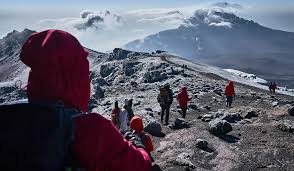
Climbing the glaciers of Mount Kilimanjaro is one of the most unique and surreal experiences in Africa. At the summit region, near Uhuru Peak, you will find remnants of ancient ice fields that give climbers a rare chance to walk near tropical glaciers.
Although these glaciers are shrinking due to climate change, they still form a dramatic part of the Kilimanjaro summit experience.
What Are Kilimanjaro Glaciers?
Kilimanjaro glaciers are permanent ice formations found near the summit, mainly around:
- Uhuru Peak area
- Crater rim
- Northern ice fields
They are the last remaining glaciers of what was once a much larger ice cap.
Where You See Glaciers on Kilimanjaro
Most glacier views occur during the final stages of the climb:
- Near Stella Point
- Around Uhuru Peak
- Inside the summit crater (Crater Camp area)
Some routes also allow closer views of the ice fields depending on conditions and weather.
Can You Actually Climb the Glaciers?
Yes, but with limitations.
You can:
- Walk near glacier areas
- Touch or stand beside ice formations
- Explore the summit crater (with special permits or routes)
However:
- Technical ice climbing is generally not required
- Most climbers only hike around glacier edges
Difficulty of Glacier Climbing
Glacier walking on Kilimanjaro is not technically difficult, but conditions are challenging:
- Extremely thin air (low oxygen)
- Freezing temperatures
- Strong winds
- Slippery icy surfaces in some areas
The main challenge is altitude, not climbing skill.
Weather Conditions Around the Glaciers
At glacier level, conditions are extreme:
- Temperatures can drop below -15°C
- Strong winds are common
- Intense sun exposure despite cold
- Rapid weather changes
Even during sunrise, frost and ice remain visible.
Safety Tips for Glacier Areas
Safety is very important at high altitude:
- Follow your guide at all times
- Avoid stepping onto unstable ice
- Wear proper crampons if required (rare for standard routes)
- Stay hydrated even in cold weather
- Move slowly to avoid altitude stress
Guides from licensed operators always lead glacier-area visits.
What to Wear for Glacier Exploration
Proper gear is essential:
- Heavy insulated jacket
- Thermal base layers
- Waterproof outer shell
- Warm gloves (preferably double-layer)
- Balaclava or neck warmer
- Sunglasses with UV protection
- Sturdy hiking boots
Wind chill can make temperatures feel much colder than they are.
Best Time to See Kilimanjaro Glaciers
The best visibility is during:
- January to March
- June to October
Clear skies increase your chances of seeing the ice fields.
However, glaciers can be visible year-round depending on weather conditions.
The Future of Kilimanjaro Glaciers
Scientists report that glaciers on Mount Kilimanjaro are shrinking due to climate change.
Key facts:
- Significant ice loss over the last century
- Smaller glacier coverage each decade
- Possibility of disappearance in the future
This makes glacier trekking a rare and time-sensitive experience.
Challenges of Glacier Climbing
Even though it is visually stunning, it comes with challenges:
- Extreme cold
- Low oxygen levels
- Physical exhaustion after summit push
- Limited time at the summit area
Most climbers spend only a short time near the glaciers before descending.
Why Glacier Climbing Is Special
Despite the challenges, the experience is unforgettable:
- Walking above clouds
- Seeing ancient ice formations in Africa
- Standing at the roof of the continent
- Experiencing one of Earth’s rare tropical glaciers
It is a highlight of any Kilimanjaro expedition.
Final Thoughts
Glacier exploration on Mount Kilimanjaro is a rare and powerful experience that combines adventure, beauty, and environmental awareness. While the glaciers are fragile and shrinking, they remain one of the most iconic features of the mountain.
For many climbers, standing near the ice fields at the summit is the ultimate reward after days of trekking.

