

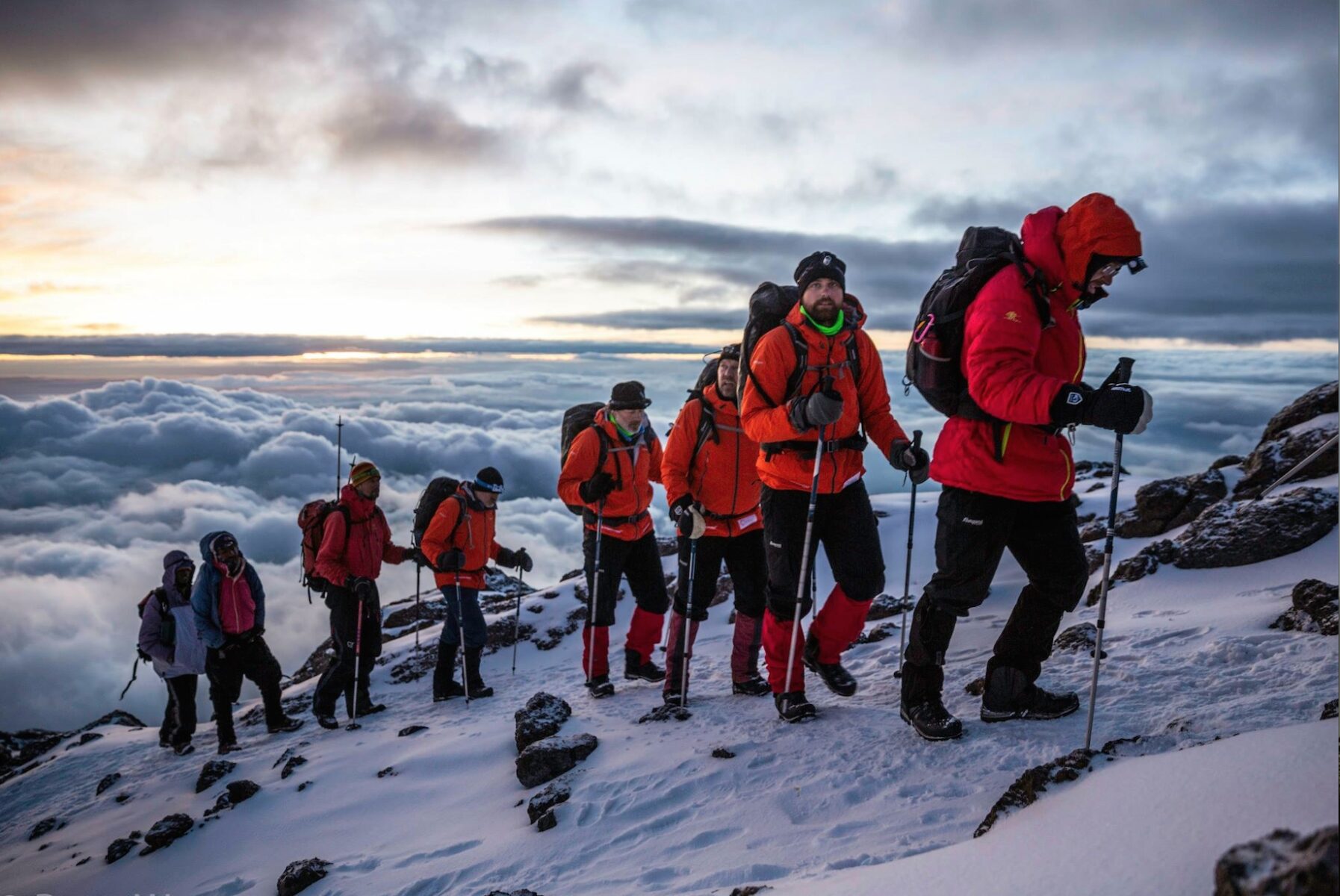
Understanding oxygen levels and altitude is essential when climbing Mount Kilimanjaro. As you ascend in Tanzania, the air becomes thinner, making it harder for your body to function normally. Knowing these facts will help you prepare and increase your chances of reaching the summit safely.
How Altitude Affects Oxygen
At higher elevations, the amount of oxygen in the air decreases. This means:
- Your body gets less oxygen with each breath
- Breathing becomes faster and deeper
- Physical activity feels more difficult
At the summit of Kilimanjaro (5,895m), oxygen levels are about 50% of what they are at sea level.
Oxygen Levels by Altitude
Here’s how oxygen changes as you climb Mount Kilimanjaro:
- 1,800m (Start of trek): ~80–85% oxygen
- 3,000m: ~70% oxygen
- 4,000m: ~60% oxygen
- 5,895m (Summit): ~50% oxygen
This gradual decrease is why acclimatization is so important.
Altitude Zones on Kilimanjaro
During your climb, you pass through several altitude zones:
- Rainforest Zone (low altitude, higher oxygen)
- Moorland Zone (moderate altitude)
- Alpine Desert (low oxygen, dry conditions)
- Arctic Summit Zone (very low oxygen, freezing temperatures)
Each zone presents different challenges to your body.
Common Effects of High Altitude
Many climbers experience mild symptoms such as:
- Headache
- Dizziness
- Fatigue
- Loss of appetite
- Shortness of breath
These are normal but should be monitored carefully.
What is Altitude Sickness?
Altitude sickness occurs when your body struggles to adapt to reduced oxygen levels.
Types include:
- Mild (common and manageable)
- Moderate (requires attention)
- Severe (dangerous—requires immediate descent)
Listening to your guide is critical.
Tips to Handle Low Oxygen
Walk Slowly (“Pole Pole”)
- Slow pace helps your body adjust
- Avoid rushing during the climb
Stay Hydrated
- Drink 3–4 liters of water daily
- Helps your body adapt better
Eat Properly
- Maintain energy levels with regular meals
- Even if appetite is low, try to eat
Acclimatize Well
- Choose longer routes (7–8 days)
- Follow “climb high, sleep low” principle
Do You Need Oxygen Tanks?
- Most climbers do not use supplemental oxygen
- Guides carry emergency oxygen for safety
- Oxygen is used only in serious cases
Best Preparation Before Climb
- Train your body with cardio and hiking
- Learn about altitude effects
- Consider consulting a doctor if unsure
- Travel insurance is highly recommended
Best Routes for Acclimatization
- Lemosho Route – Best for gradual ascent
- Machame Route – Good balance of challenge and acclimatization
- Northern Circuit – Longest and highest success rate
Final Thoughts
Understanding oxygen and altitude is key to successfully climbing Mount Kilimanjaro. With proper pacing, hydration, and acclimatization, most climbers can safely adapt and enjoy the journey to the summit in Tanzania.

