

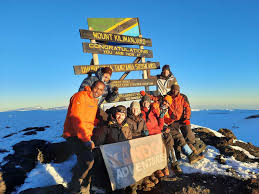
Climbing Mount Kilimanjaro for the first time is something you can’t fully understand until you live it. It is not just a hike—it is a mix of excitement, fear, pain, hope, and unforgettable moments that stay with you forever.
This is what a first-time climber often experiences from the base to the summit.
The Journey Begins: Excitement at the Gate
The adventure starts at the park gate, where everything feels new and overwhelming. The mountain looks huge, almost unreal.
At this stage:
- You are excited to begin
- Your backpack feels light
- You take many photos
- You believe it will be “not too hard”
Most first-time climbers underestimate the journey ahead.
First Days on the Mountain: Nature and Adjustment
As you move through the lower slopes of Mount Kilimanjaro, everything feels beautiful and peaceful.
You walk through:
- Rainforest zones with tall trees
- Birds and monkeys along the trail
- Fresh air and soft trails
But your body slowly starts adjusting:
- Legs begin to feel tired
- Walking “pole pole” (slowly, slowly) becomes important
- You start realizing this is not an ordinary hike
The First Night in Camp: Reality Hits
Sleeping in mountain tents is a new experience for most first-timers.
At night:
- The temperature drops quickly
- You hear wind outside the tent
- Sleeping is uncomfortable
- Your body starts feeling the altitude
This is when you realize Kilimanjaro is not just about walking—it is about endurance.
Altitude Effects: The Hardest Surprise
As you climb higher, the air becomes thinner. This is where many first-time climbers struggle.
Common feelings include:
- Headaches
- Loss of appetite
- Slow energy levels
- Shortness of breath
Even simple walking becomes harder, and your pace slows naturally.
Mental Struggle: Doubt and Determination
Every first-time climber reaches a moment of doubt.
You start asking yourself:
- “Can I really make it?”
- “Why is this so hard?”
- “Should I turn back?”
But at the same time, something stronger appears:
- Encouragement from guides
- Support from fellow climbers
- Personal determination to continue
This mental battle defines the journey.
Summit Night: The Real Test
The most intense part of the climb is summit night on Mount Kilimanjaro.
You start walking in complete darkness:
- Cold wind hits your face
- Headlamps form a long line up the mountain
- Every step feels heavy and slow
This is where many first-timers feel they are at their limit—but keep going anyway.
Reaching the Top: Emotional Explosion
When you finally reach Uhuru Peak, everything changes instantly.
You feel:
- Relief
- Shock
- Happiness
- Tears of joy
All the pain, cold nights, and exhaustion suddenly make sense.
You realize you didn’t just climb a mountain—you changed yourself.
The Descent: Reflection Begins
Going down is easier physically but emotionally powerful.
First-time climbers often think:
- “I actually did it”
- “I can’t believe I made it”
- “I will never forget this”
Every step down feels like a memory forming.
Final Thoughts
A first-time climb of Mount Kilimanjaro is not just a travel experience—it is a life lesson.
It teaches you:
- Patience when things are slow
- Strength when you feel weak
- Confidence in your own limits
Most importantly, it shows you that you are capable of more than you ever imagined.
Once you come back, you don’t just say “I climbed Kilimanjaro”—you say, “I discovered myself on Kilimanjaro.”